Architecture-focused mixer options for demanding flow-chemistry duties
Fluxway works across multiple micromixer architectures because different process duties call for different engineering trade-offs.
The goal is not to force one geometry into every application, but to identify which architecture is most worth evaluating for the process in front of us.
Why Micromixing Matters
In many chemical processes, mixing directly affects local concentration, heat release behavior, selectivity, and reproducibility.
When chemistry moves quickly, early-stage mixing can influence the entire process outcome.
A useful starting point is to ask four practical questions:
Is the process truly mixing-sensitive at the point of contact?
How much pressure-drop budget is available?
Are solids, precipitation, or fouling likely to dominate operability?
What do materials, corrosion, and fabrication constraints allow?
If you already have a process window or a shortlist of constraints, send us the basics and we can discuss which architecture is most worth evaluating first.
Send Process Window for Review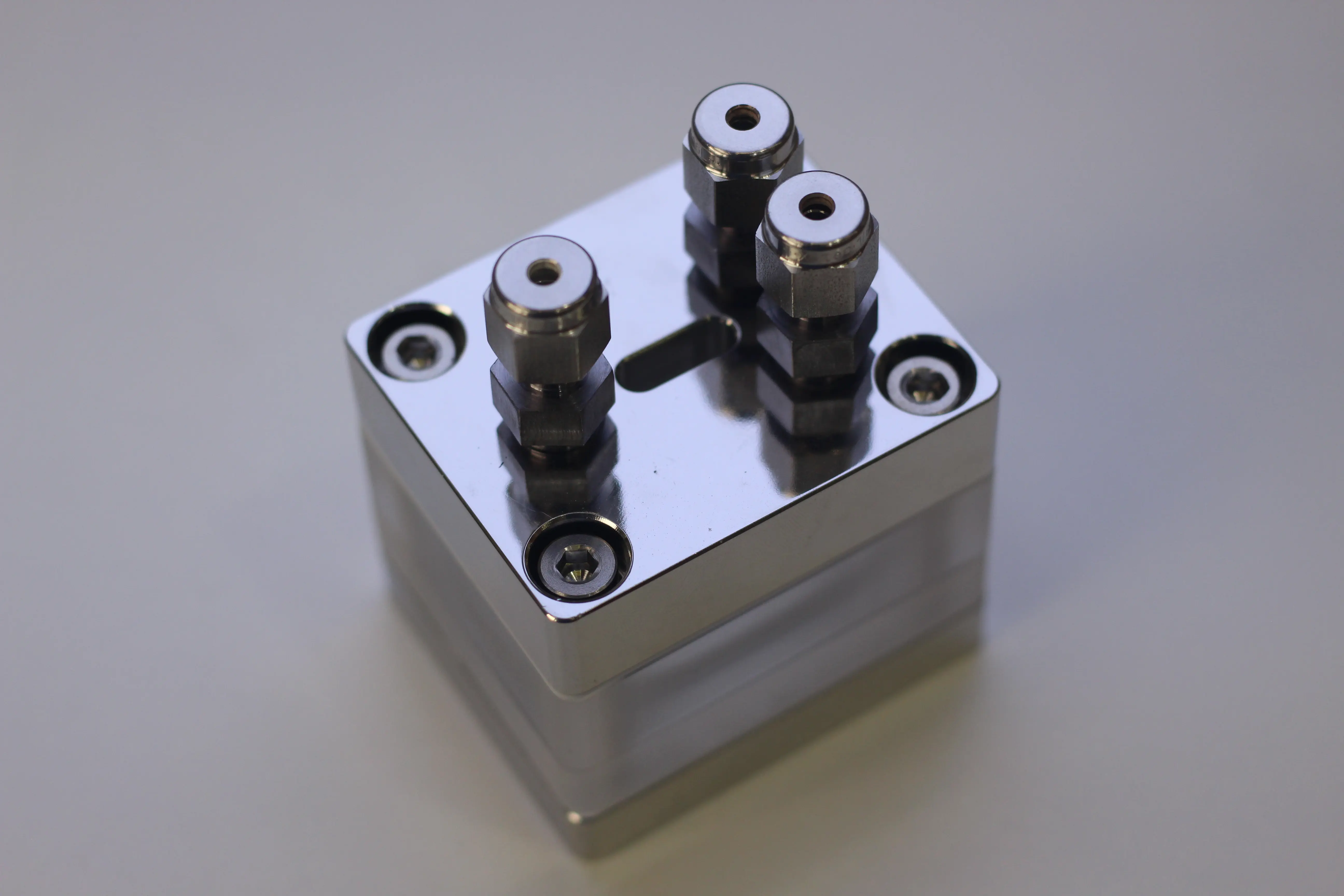
Tesla-Valve Micromixers
Passive mixing enhancement through internal flow geometry for compact liquid-phase duties.- Best fit for: Simple passive mixing duties where compactness and geometric elegance are valuable.
- Less suitable when: Severe solids handling or aggressive fouling is expected to dominate channel behavior.
- Typical considerations: Pressure drop, viscosity window, fabrication route, and channel cleanability.
Split-and-Recombine Micromixers
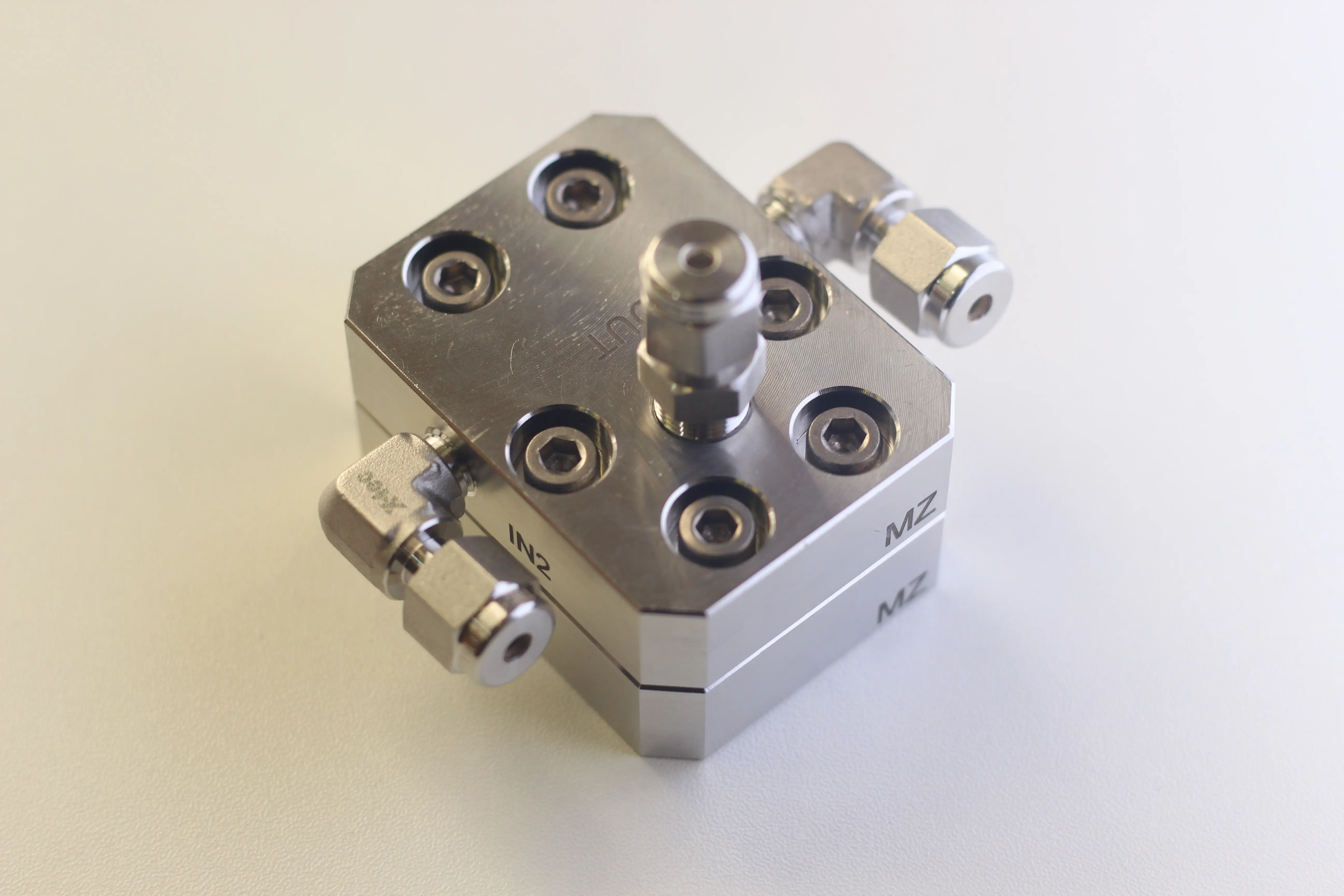
Repeated division and recombination of streams to build interface area efficiently.- Best fit for: Applications where controlled lamination and repeated redistribution improve mixing consistency.
- Less suitable when: The duty cannot tolerate additional complexity or when solids risk makes narrow structured paths unattractive.
- Typical considerations: Internal passage complexity, flow distribution, pressure drop, and fabrication feasibility.
Slit Interdigital Micromixers
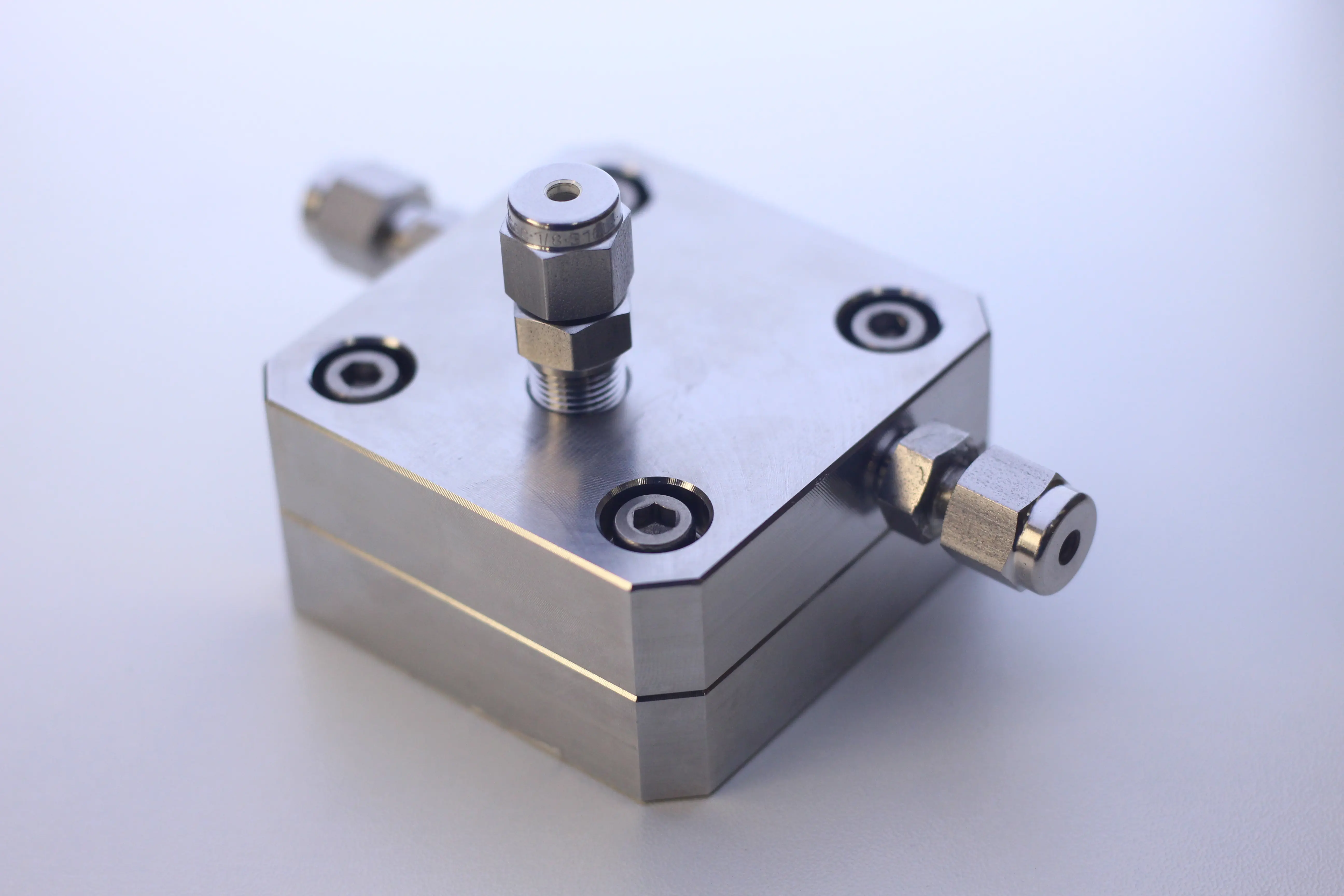
Fine front-end stream subdivision for rapid initial contacting.- Best fit for: Processes where the first instant of contact strongly affects reaction or quench behavior.
- Less suitable when: Solids loading, plugging risk, or fabrication limits make very fine entrance structures impractical.
- Typical considerations: Inlet balancing, clogging tolerance, fabrication precision, and feed conditioning.
Multilamination Micromixers
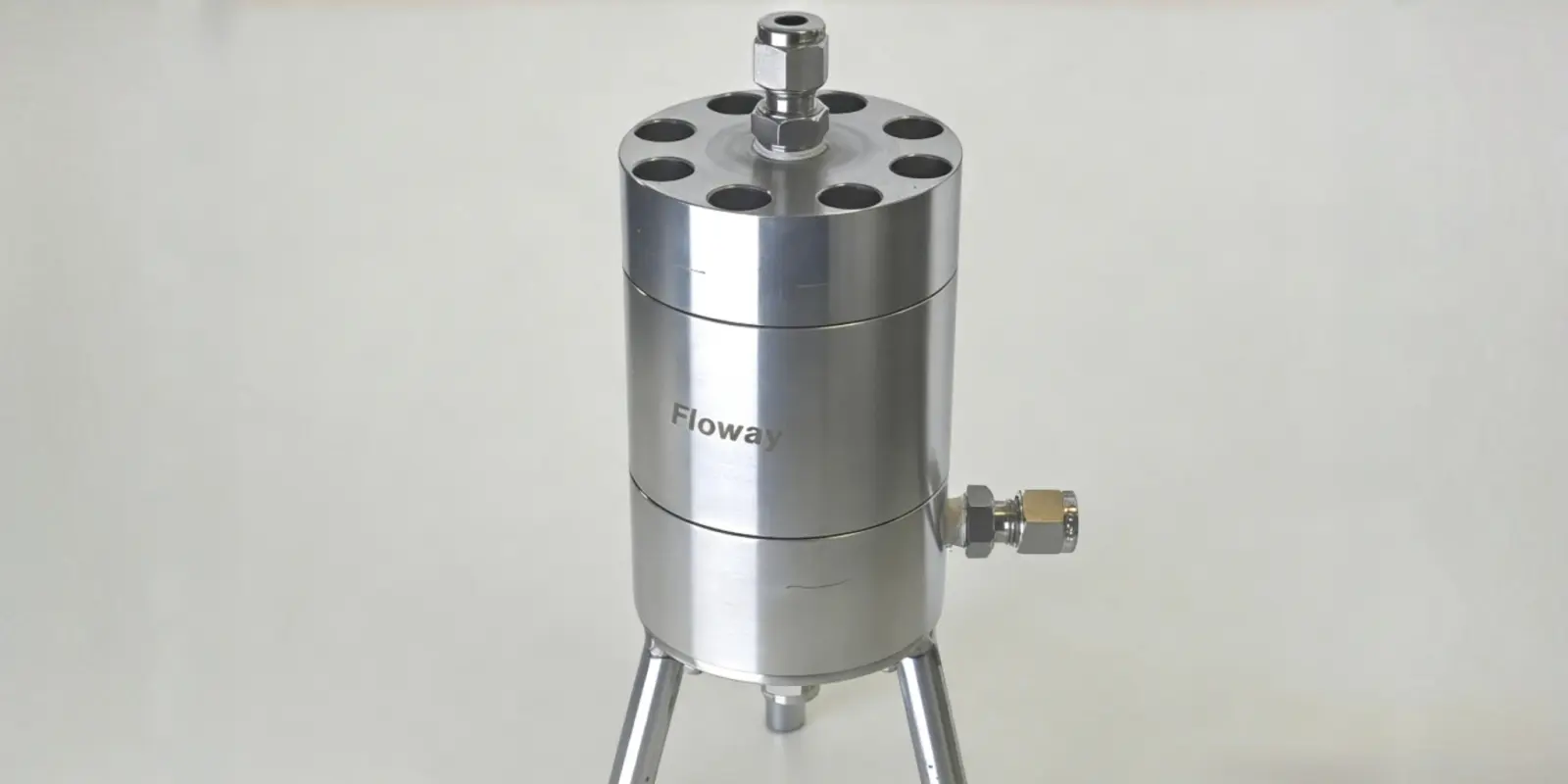
Layered stream arrangement to create thin striations and reduce diffusion distance.- Best fit for: Liquid-phase duties that benefit from strong lamination before downstream residence or reaction control.
- Less suitable when: The process requires a simpler or more open geometry for operability reasons.
- Typical considerations: Layer uniformity, distribution stability, manufacturability, and allowable pressure loss.
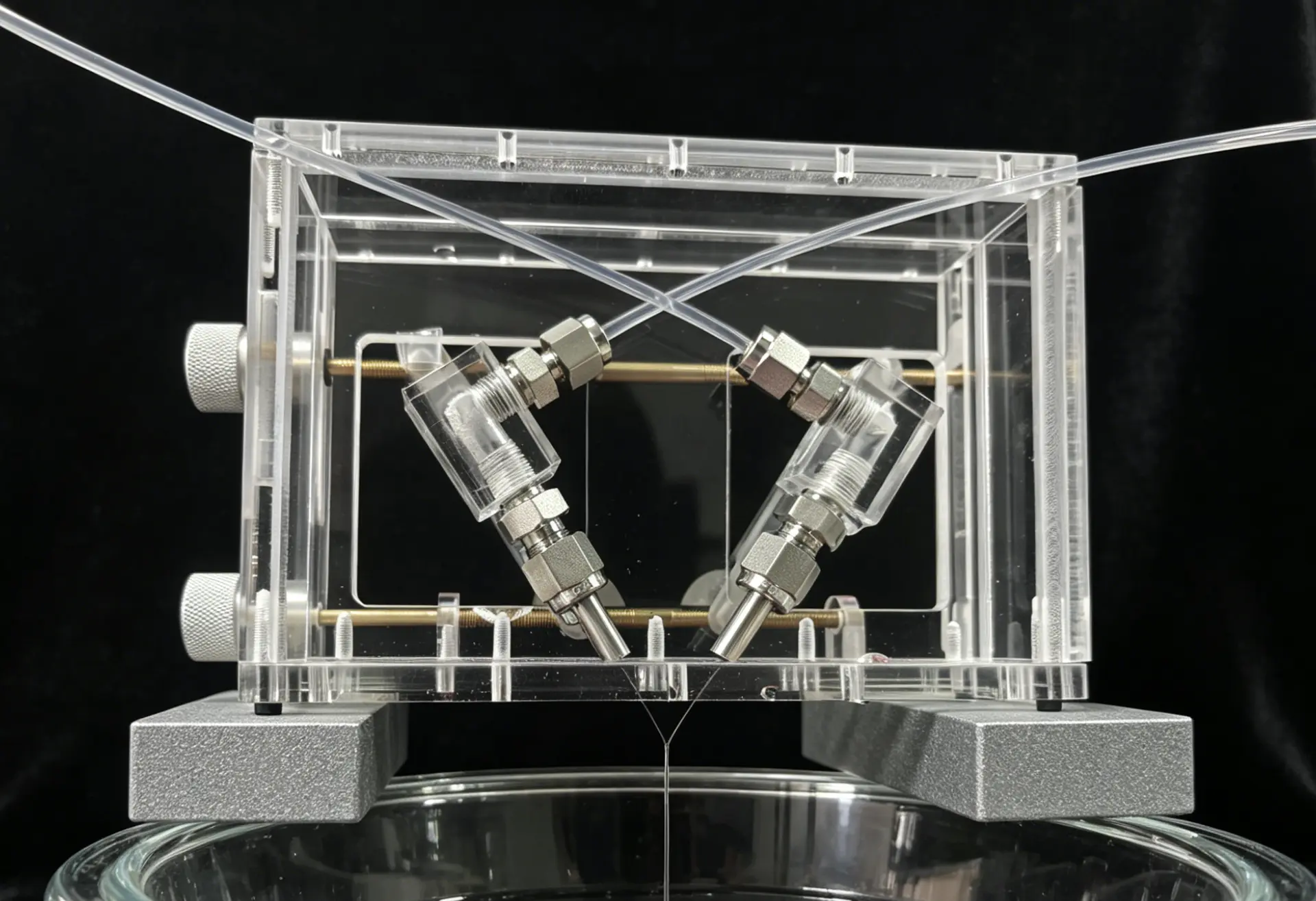
Impinging / Collision Micromixers
High-intensity contacting through controlled jet impingement or collision-based mixing.- Best fit for: Very fast front-end mixing duties where local non-uniformity materially changes process outcome.
- Less suitable when: The process window is too sensitive to pressure fluctuation, or droplet formation and fouling make it unattractive.
- Typical considerations: Jet coherence, nozzle geometry, solids tolerance, cleanability, and scale-up intent.

Custom Architectures
Process-specific mixer development when standard architecture categories do not fit the duty cleanly.- Best fit for: Cases with unusual chemistry, material constraints, solids behavior, or integration requirements.
- Less suitable when: A simpler standard architecture can already answer the engineering question effectively.
- Typical considerations: Scope definition, expected benefit versus complexity, fabrication path, and testing strategy.
Architecture Comparison at a Glance
A first-pass comparison of pressure drop, solids tolerance, fabrication, and typical fit. Final selection still depends on the actual duty and process window.
| Architecture | Pressure drop | Solids tolerance | Fabrication | Typical fit |
|---|---|---|---|---|
| Tesla-Valve | Often moderate | Usually lower | Moderate internal routing | Compact liquid-phase duties where passive mixing is worth evaluating |
| Split-and-Recombine | Moderate to high | Low to moderate | Structured multilayer routing | Applications where repeated redistribution improves mixing consistency |
| Slit Interdigital | Often high | Usually lower | Precision entrance structures | Very fast front-end contacting with tight feed control |
| Multilamination | Moderate to high | Low to moderate | Layered channel fabrication | Liquid-phase duties that benefit from strong lamination before downstream residence |
| Impinging / Collision | Duty-dependent, often moderate to high | Low to moderate | Nozzle and jet-control driven | Very fast contacting where local non-uniformity materially changes outcome |
| Custom architecture | Duty-dependent | Duty-dependent | Project-specific | Constrained or unusual process windows that do not fit a standard starting point |
If you already know your flow range, temperature / pressure window, and likely fouling risk, we can use that as the starting point for a focused discussion.
Discuss Architecture FitTypical Inputs We Need
Process or chemistry description
Total flow range and feed ratio
Temperature and pressure range
Physical properties or phase behavior, where known
Solids, precipitation, or fouling risk
Primary objective: selectivity, safety, quench, scale-up, heat management, or process intensification
Typical Deliverables
Where appropriate, custom-development discussion around a defined process question
Need help judging which micromixer architecture is worth evaluating first?
We welcome focused technical discussions built around the actual process duty rather than generic product matching.